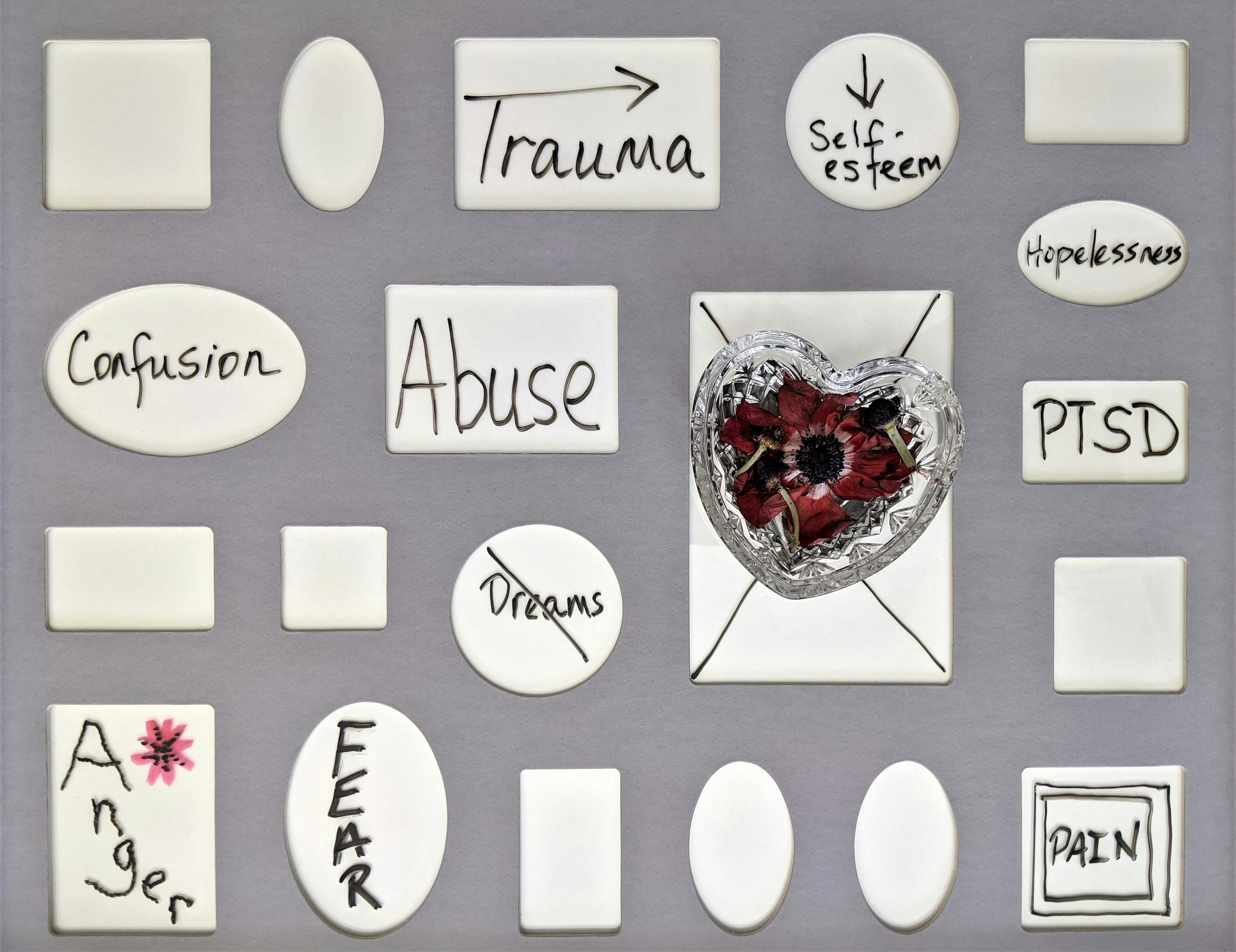
Trauma Bonding, or Bonding Over Trauma?
You may have heard the term “trauma bonding,” but there is often confusion over what it actually means.
Consider the following two examples:
- “My boyfriend and I are so close; we both grew up in abusive households, so we are trauma-bonded.”
- “My boyfriend can be very loving one minute and verbally abusive the next, but I just can’t seem to leave him. I guess I’m trauma-bonded.” *
What Is Trauma Bonding?
Trauma bonding is a complex relationship dynamic in which an abused partner bonds with the person who is hurting them. There are relatively predictable stages in this type of relationship, which often begins with “love bombing,” a kind of emotional tsunami that is designed to flood the recipient with love and adoration. The effect is to make the person dependent on the positive reinforcement, and to set a baseline, so that once the abuser withdraws the love and affection, their partner is caught off-balance, longing for the (now removed) love and support, yet tormented by the knowledge of “how good it can be.” The abuser will then restore the affection, then withhold it again, setting up a pattern of affection alternated by periods of criticism and cruelty. Trauma bonding is insidious because the pain and the solution to it come from the same person.
How Does It Work?
Trauma bonding “works” because it is an effective form of intermittent reinforcement, first recognized by American psychologist B. F. Skinner, which is the same psychological mechanism that makes gambling so addictive.
Here’s how it works:
Imagine a rat, and we are conducting an experiment to determine what will make the rat exhibit obsessive behavior. We set up a lever, and when the rat presses the lever, he is given a pellet of his favorite food.
We now begin to alter the frequency with which the food pellet is given. If we set up the lever to dispense food whenever it is pressed, the rat becomes full and becomes bored. He loses interest.
If we set up the lever to dispense food every other time it is pressed, the rat soon figures it out and also loses interest.
If we set the lever to dispense food every 100 taps, the rat will also eventually figure out that if he presses it enough, his food will appear. The game eventually loses its appeal.
However, if we set up the lever to dispense food intermittently—that is, unpredictably—the rat stays alert and engaged, and then obsessed. Sometimes it takes one tap, or five, or 50—the rat never knows when the food will appear. In the words of Dr. Andrew Weil, “The way to make a rat a sad, hopeless, bloody-pawed, bar-pounding addict was to have food pellets roll out after some random number of presses: three, eight, four, two, one, five, 19, six, and so on. Rats on such intermittent reward schedules pressed the bar exclusively. Other things rats had done for millennia — forage for food, mate, build brood nests, raise their young — fell by the wayside. Whatever portion of self-direction and — I’m tempted to say — dignity a rat possessed gave way to their obsession, usually until they worked themselves to exhaustion.”
When it comes to motivation and reward, humans have a lot in common with rats. This is how slot machines work. This is also the mechanism behind trauma bonding. Approval is given unpredictably and inconsistently, and the abused person will keep trying, hoping for the powerful reward of kindness and approval.
Signs of Trauma Bonding
- A power imbalance between partners
- Social isolation from family and friends
- High-intensity emotional experiences
- A dynamic of unpredictable cycling between emotional danger and then rescue by the abuser
Stages of Trauma Bonding
Trauma bonding typically develops through several distinct stages:
- Love bombing and idealization. The relationship begins with excessive attention, affection, and promises. This phase creates a powerful initial bond and sets up expectations for how good the relationship “could be.”
- Trust and dependency. The victim begins to trust and depend on the abuser, often sharing vulnerabilities that will later be used against them.
- Criticism and devaluation. The abuser begins to criticize, devalue, and find fault with the victim, creating confusion and damaging self-esteem.
- Manipulation and control. Controlling behaviors increase, often through gaslighting, isolation, and emotional manipulation.
- Resignation and acceptance. The victim begins to accept the abuse as normal, adjusting their behavior and expectations to accommodate the abuser.
- Loss of sense of self. The victim’s identity becomes increasingly defined by the relationship and their role in pleasing the abuser.
- Cycling abuse and reconciliation. Periods of tension and abuse are followed by reconciliation and connection, creating a powerful addiction cycle.
Understanding these stages helps clarify how trauma bonding gradually entraps a person in a relationship that becomes increasingly difficult to leave. It chips away at a person’s sense of confidence, and it can lead to feelings of powerlessness and despair.
We Can Help
If you recognize some or all of these factors in your relationship, working with a therapist at SCC can help you regain your confidence, and it can help you find the courage to live free from the cycle of abuse.
*In this example, the second quote is the correct use of the term.
Nancy Rosenberg, LMFT, works virtually and in our north Dallas location.